
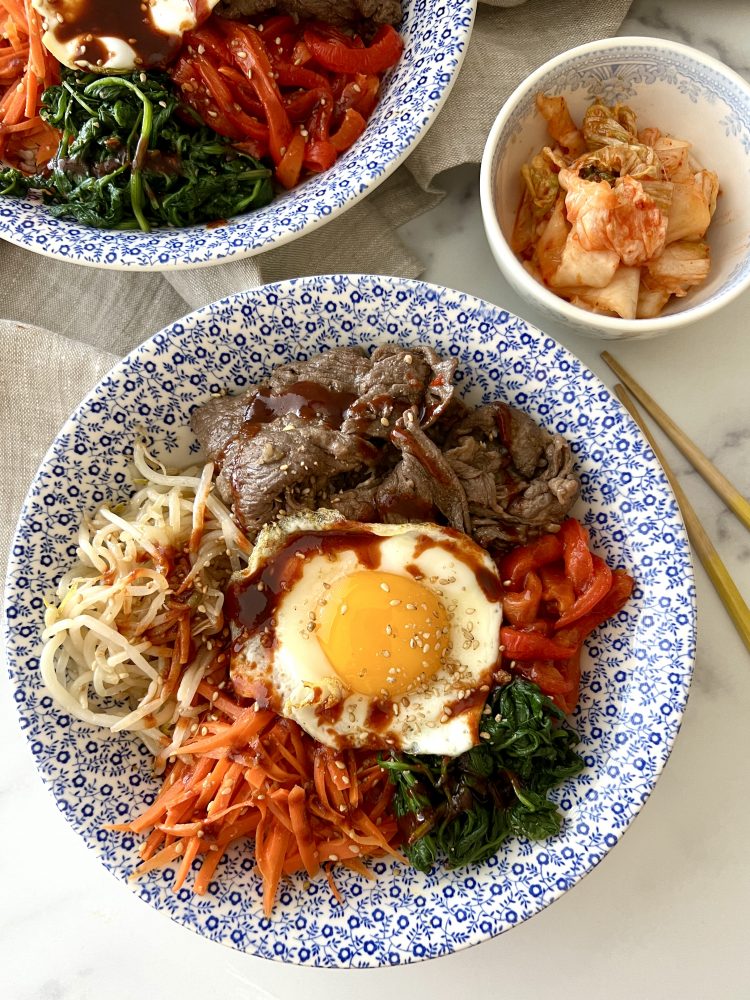
Bibimbap is one of those dishes that feels both nourishing and indulgent, with tender beef, fresh vegetables, a runny fried egg, and rich gochujang sauce over warm rice.
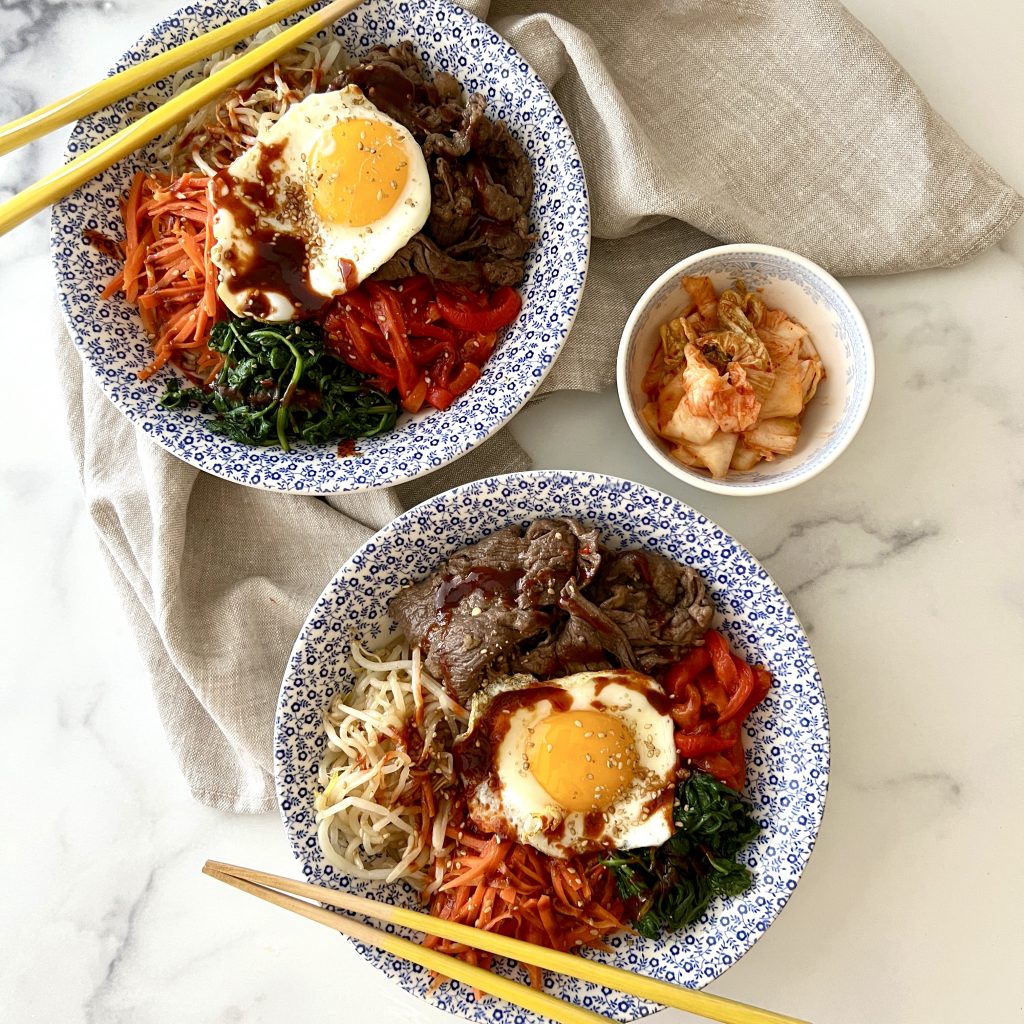
Bibimbap is a classic Korean mixed rice dish. It’s a colorful bowl of warm rice topped with seasoned vegetables, marinated beef, and a fried egg, all finished with a bold, savory-sweet gochujang sauce.
This incredibly delicious and satisfying rice bowl is also very versatile. You can easily make it vegetarian or swap the beef for grilled or roasted fish.
Bibimbap Step by Step
Because bibimbap has several components, a little planning goes a long way. Preparing elements like the vegetables and marinated beef ahead of time makes the cooking and assembly process much smoother and far less overwhelming.
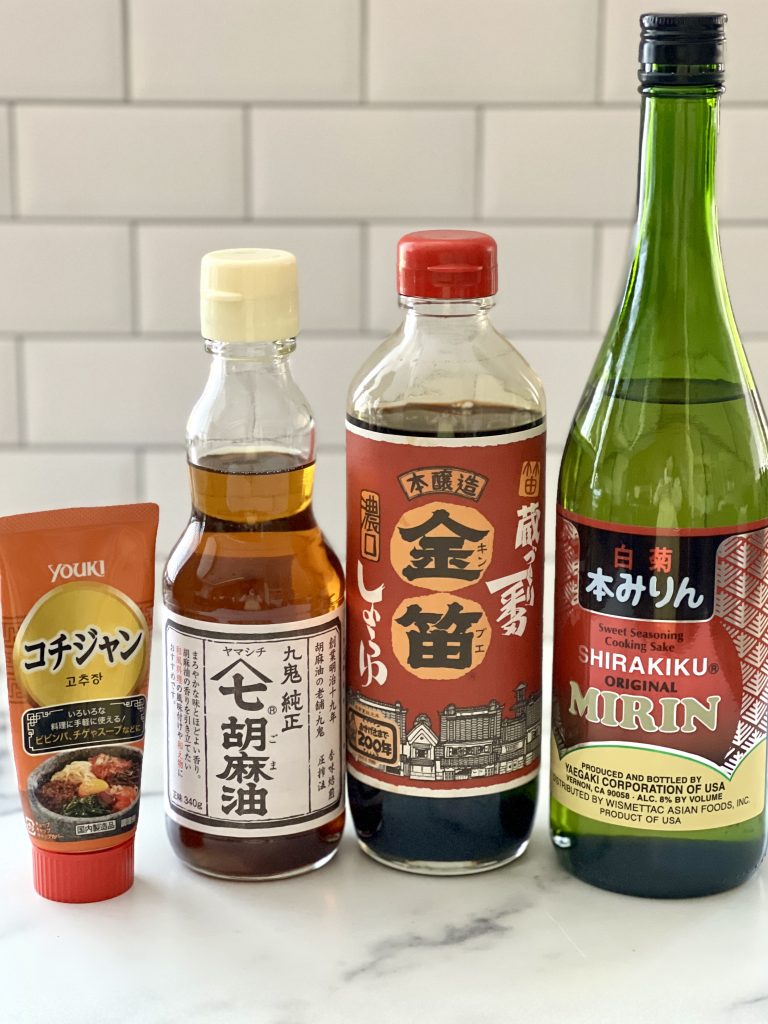
Condiments You Need
These key ingredients build the signature flavor of bibimbap:
- Gochujang – A thick, fermented chili paste that adds depth, heat, and umami. It’s an essential ingredient in many Korean dishes and can be found in most Asian grocery stores or the international aisle of major supermarkets. They come in different sizes and I even found one that comes in a small tube at my local Asian grocery store.
- Sesame oil – Used for seasoning, marinades, and as a finishing oil. A small amount adds a rich, nutty aroma.
- Soy sauce – I like to use premium soy sauce for best flavor. My favorite is Kinbue soy sauce brewed by Fueki Syoyu Brewing using traditional methods.
- Mirin – Sweet rice wine that’s used for seasoning and often used for marinades. I used Japanese mirin, but there’s also Korean version called mirim which is similar.
Bibimbap Sauce
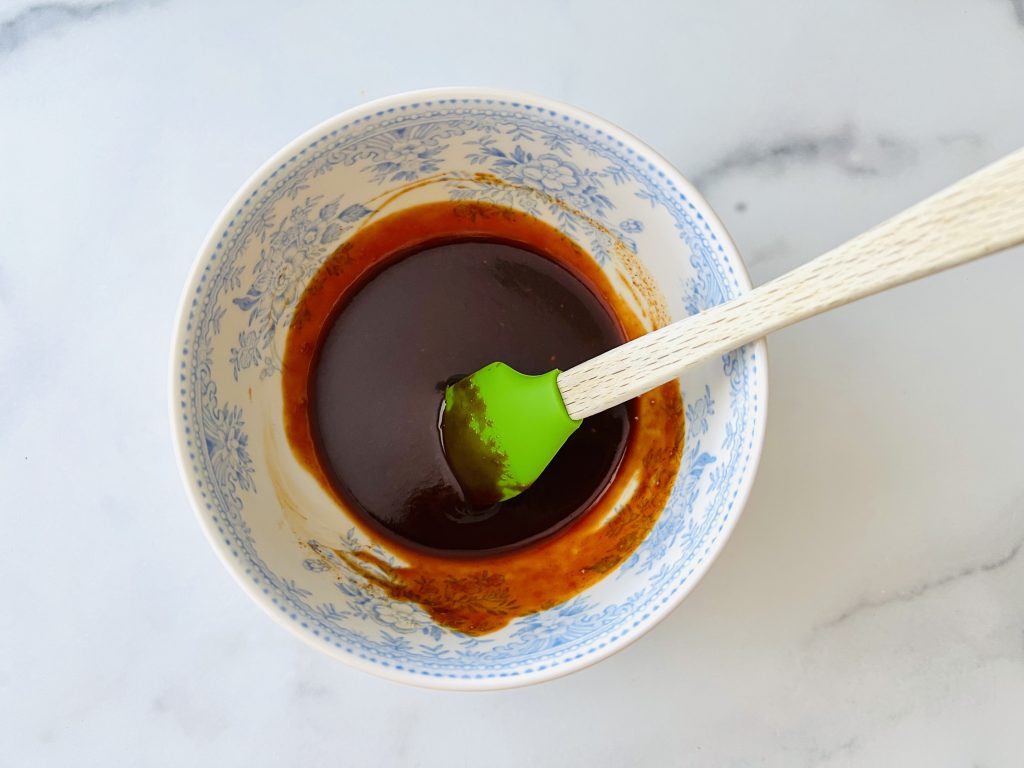
This is the flavor packed sauce that brings everything together. I like to prepare it at the beginning so it’s ready when it’s time to assemble.
Simply whisk together gochujang, apple cider vinegar, soy sauce, sugar, and sesame oil until smooth.
Cook the Rice
You’ll need 4 cups of cooked rice. Short-grain white rice is traditional, but brown rice works just as well. Cook according to package instructions and keep warm until ready to assemble.
Vegetables
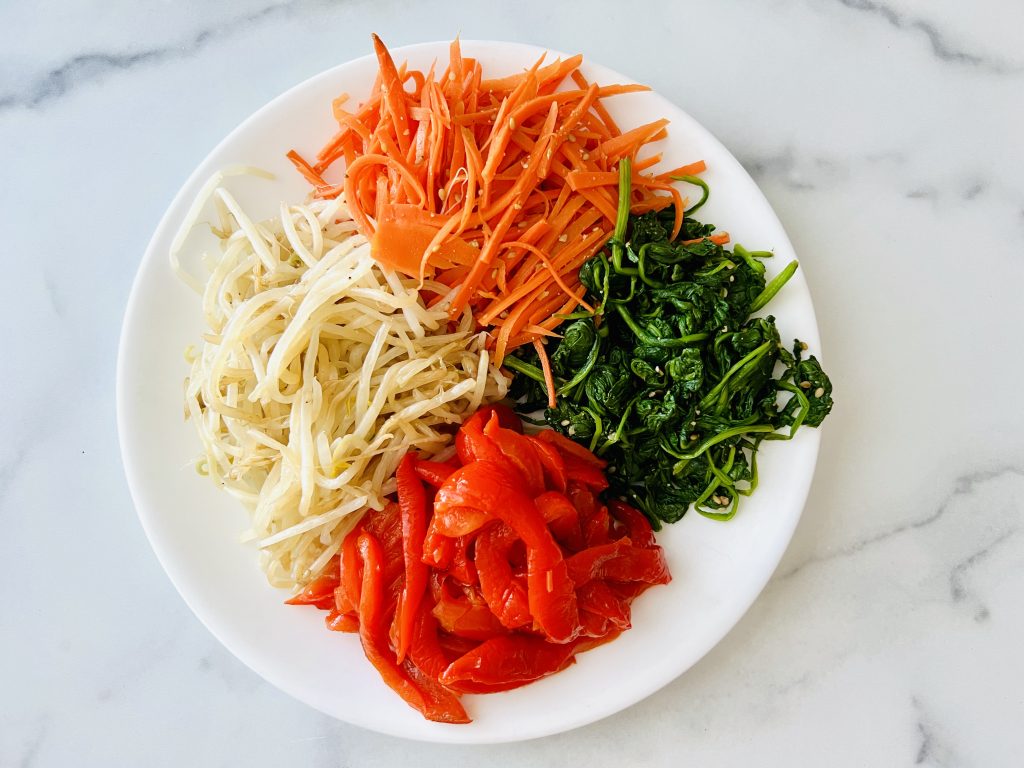
Typical vegetables for bibimbap include bean sprouts, carrots, and spinach, but this dish is very flexible. You can also add roasted bell peppers (which I used), zucchini, cucumbers, or mushrooms.
I prepared simple namul using bean sprouts, carrots, and spinach. Namul refers to seasoned Korean vegetable side dishes. Each vegetable is briefly boiled, drained, and then lightly seasoned with soy sauce, sesame oil, salt, and sesame seeds.
Preparing the namul a day ahead makes assembling bibimbap much easier.
Marinating and Searing Beef
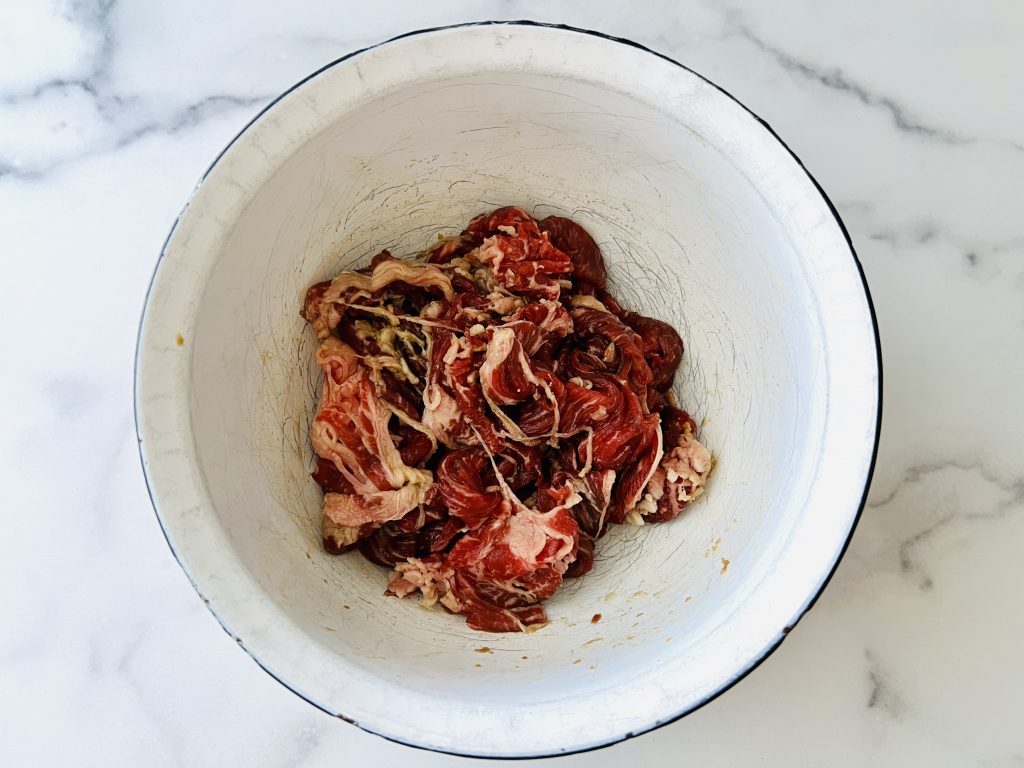
For bibimbap, I prefer thinly sliced beef. Marinate the beef in soy sauce, mirin, sugar, minced garlic for anywhere from 1-24 hours. Like Namul, you can prepare this the day or the night before.
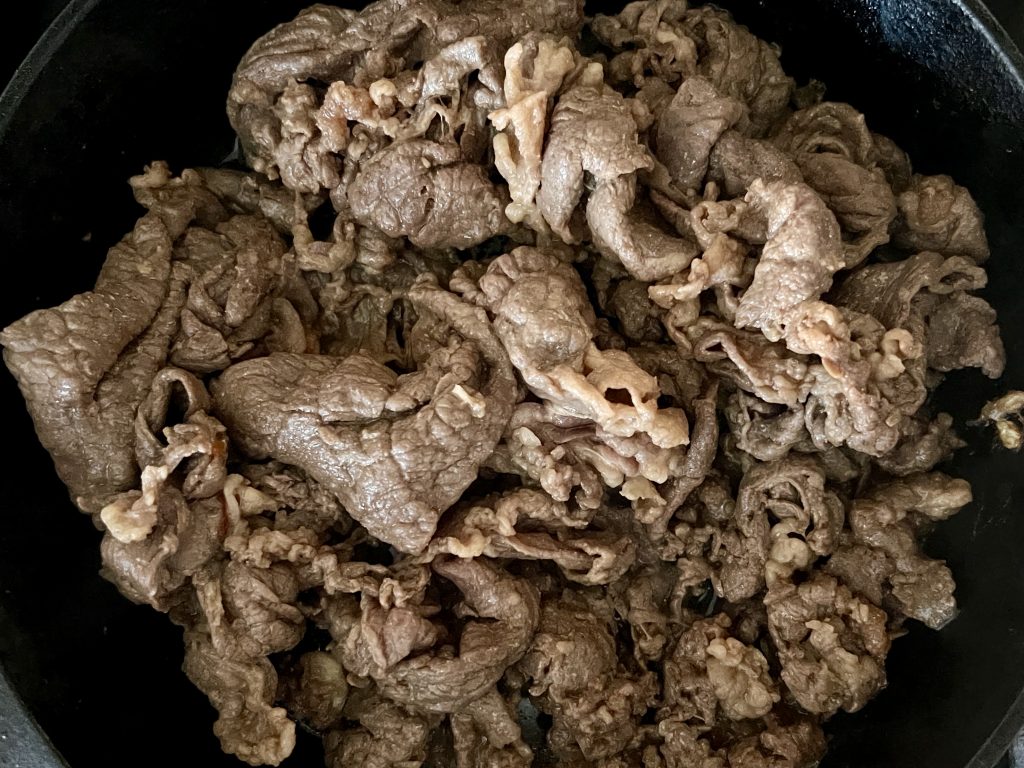
When ready to cook, heat a large skillet over medium heat and sear the beef until nicely browned. If your beef is lean, add a bit of oil to the pan. I skipped this step since my beef had enough natural fat.
Fried Egg
Fry the eggs just before assembling. I like mine with a slightly runny yolk, it adds richness when mixed into the rice.
Assembly
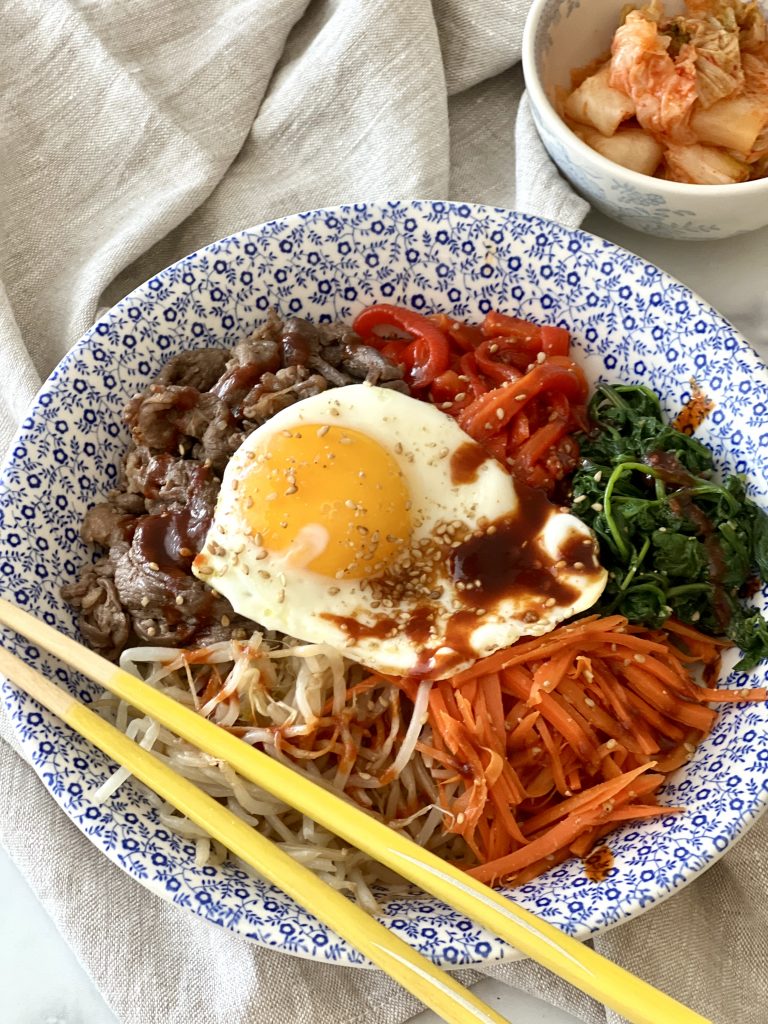
Use a wide bowl or pasta bowl for serving. My dark blue Felicity pudding bowls from Burleigh Pottery are the perfect size for this dish.
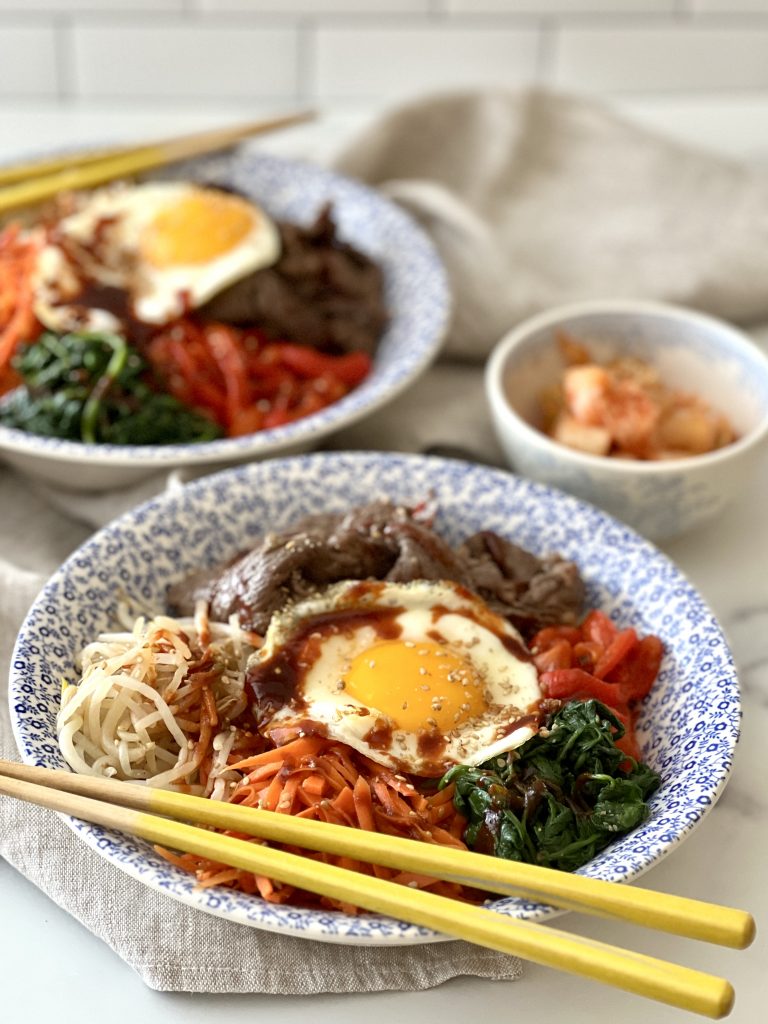
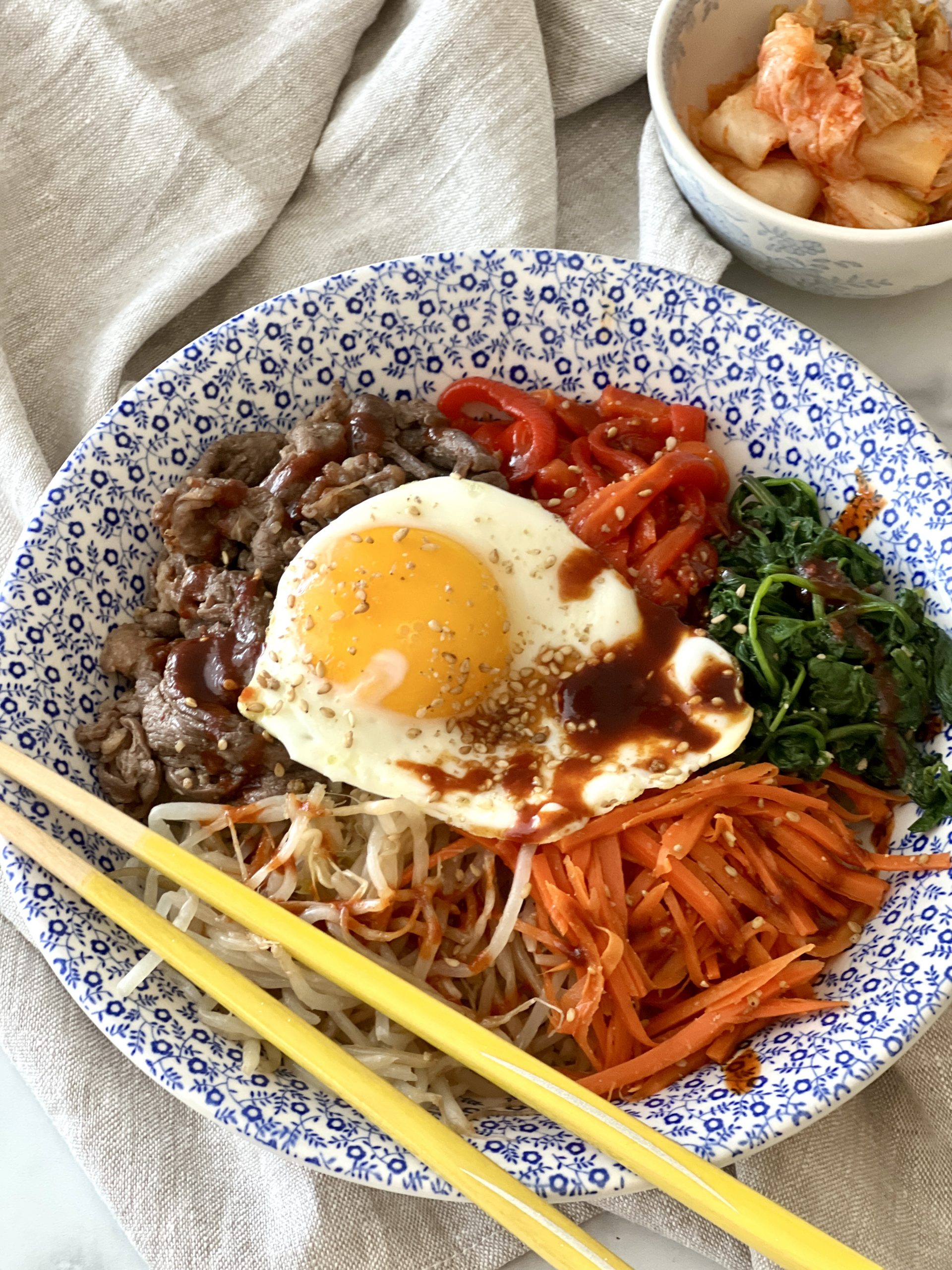
Add a portion of rice, then arrange the vegetables and beef around the bowl. Place the fried egg in the center, sprinkle with sesame seeds, and drizzle generously with the gochujang sauce.
How to Enjoy This Delicious Bowl
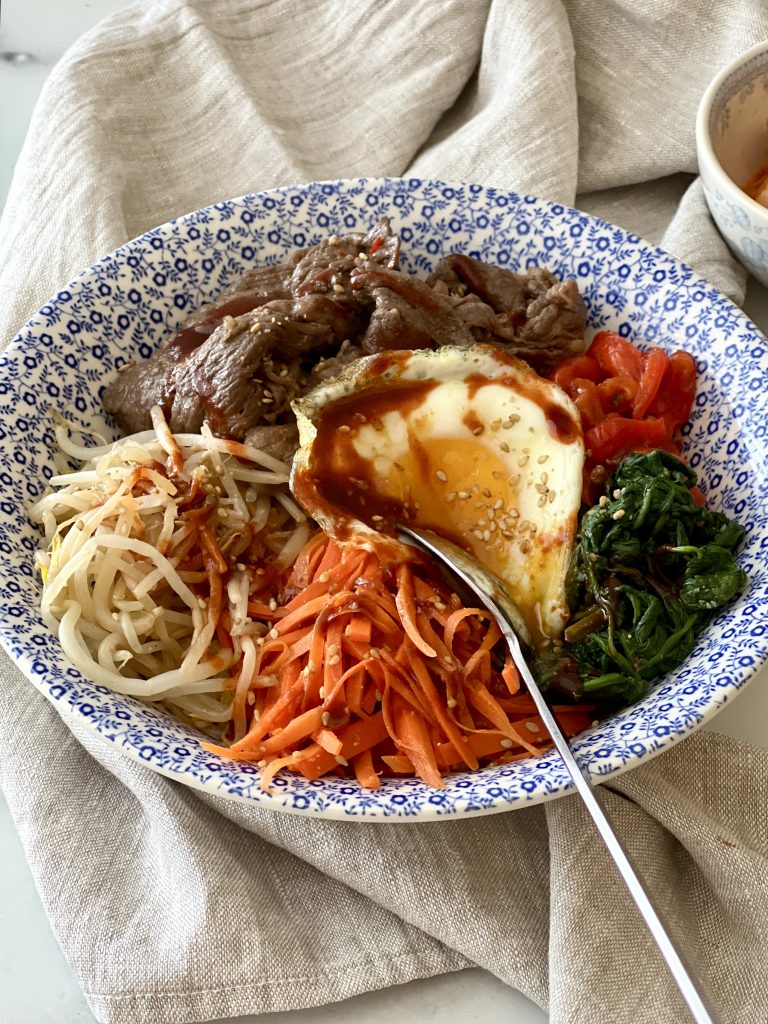
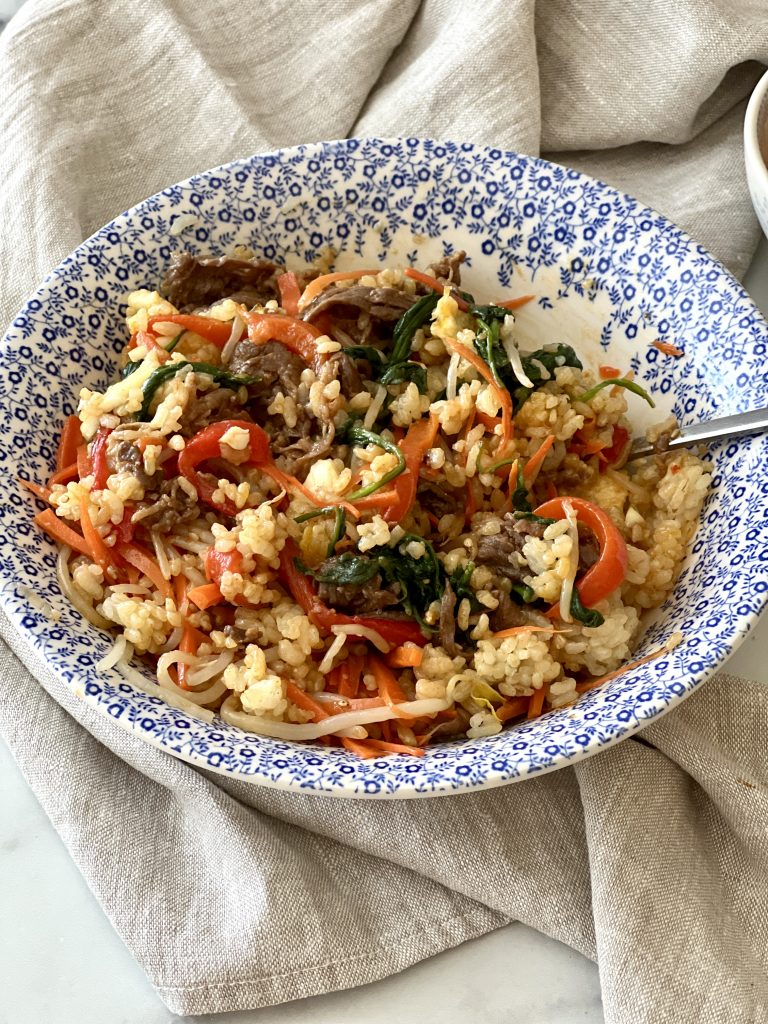
Before eating, break the egg yolk and mix everything together so the sauce, rice, and toppings are evenly combined.
I like to serve bibimbap with a side of kimchi for an extra layer of flavor.
More Asian Recipes
- Gravlax Sushi Parfait
- Asian Chili Shrimp with Ginger, Garlic & Leeks
- Vietnamese Egg Rolls
- Pork Mei Fun
- Soba Noodle Salad with Mentsuyu
- Fresh Spring Rolls and Chilled Tomato Salad
Bibimbap
Ingredients
- 4 cups cooked, short grain white rice or brown rice
- 4 eggs
- sesame seeds
Bibimpap Sauce
- ¼ cup gochujang
- ¼ cup apple cider vinegar
- ¼ cup soy sauce
- 2 tsp sesame oil
- 4 tsp sugar
Namul (Marinated Vegetables)
- 9 oz bean sprouts
- 2 small carrots, shredded
- 10 oz baby spinach
- 1½ tbsp sesame oil, divided
- 3 tsp soy sauce, divided
- 3 tsp sesame seed, divided
- salt to taste
Marinated Beef
- 12-13 oz thinly sliced beef
- 1½ tbsp soy sauce
- 1½ tbsp mirin
- 2 tsp sugar
- 2 cloves garlic, mined
Instructions
Bibimbap Sauce
- In a small bowl, combine gochujang, apple cider vinegar, soy sauce, sugar and sesame oil. Set aside.
Namul
- Bring a large pot of salted water to a boil.Boil bean sprouts for about 2 minutes. Remove with a strainer, drain well, and set aside. In the same pot, boil shredded carrots for 2 minutes. Drain and set aside. Boil spinach for about 1 minute. Drain, let cool slightly, then squeeze out excess water.
- Season each vegetable separately with ½ tbsp sesame oil, 1 tsp soy sauce, 1 tsp sesame seeds, and salt. Mix well and set aside.
Marinated Beef
- In a bowl, combine beef with minced garlic, soy sauce, mirin and sugar. Marinate for at least 1 hour or up to 24 hours.
- Heat a skillet over medium heat. Add oil if needed, then sear the beef until browned. Set aside.
Fried Eggs
- Heat skillet over medium heat, add some oil and fry eggs to your liking.
Assembly
- Divide rice into bowls (about 1 cup per serving). Arrange vegetables and beef over the rice, then place a fried egg in the center.
- Drizzle with bibimbap sauce and sprinkle with additional sesame seeds before serving.